Buy Class 1 Acoustic Calibrator Explained: A UK Buyer's Guide
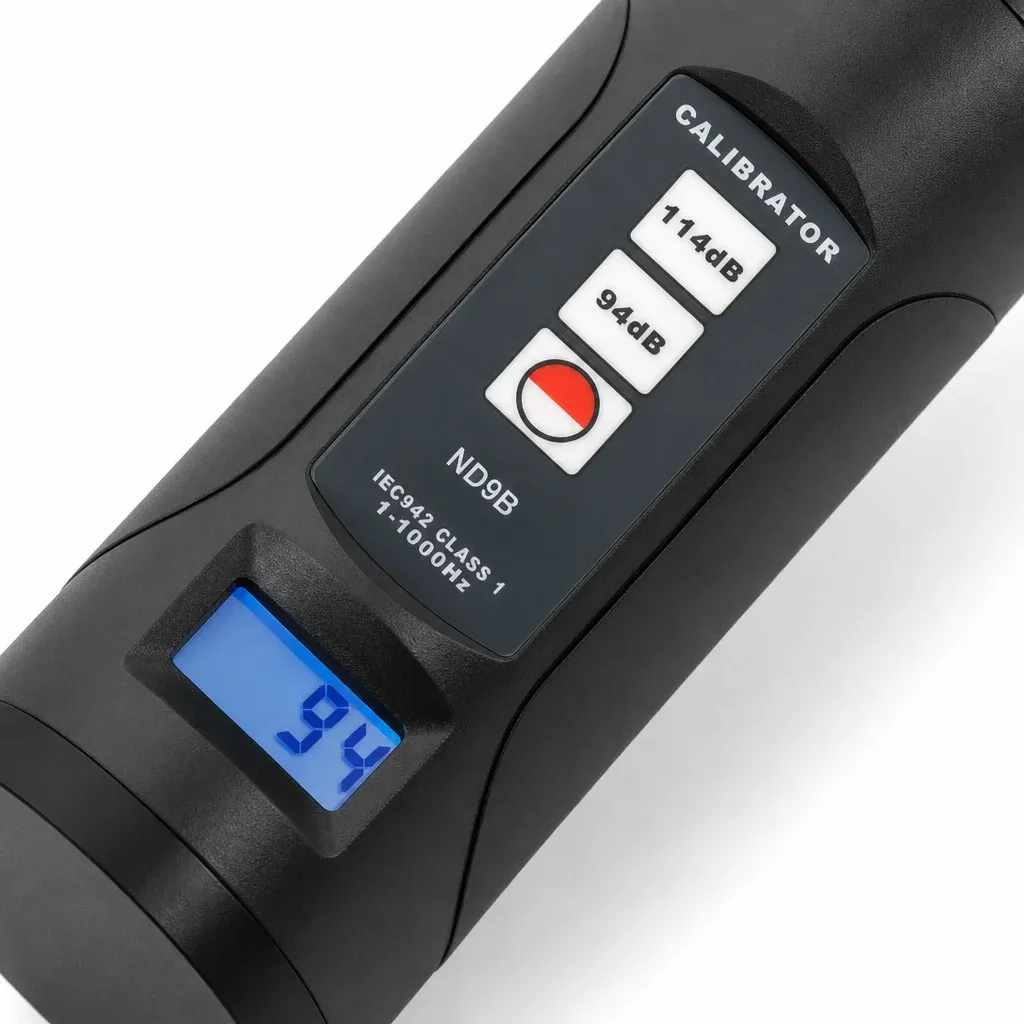
TL;DR: Buying a Class 1 acoustic calibrator ensures your sound measurements meet strict British standards (BS EN IEC 60942:2017) with a tight ±0.25 dB tolerance. Essential for legal compliance in UK environmental noise (BS 4142) and workplace health and safety (Control of Noise at Work 2005) surveys, a Class 1 calibrator provides reliable pre- and post-field verification at 1000 Hz across 94 dB and 114 dB reference levels.
Key Takeaways
- Strict Legal Compliance: Class 1 acoustic calibrators meet BS EN IEC 60942:2017 standards, providing a tight sound pressure tolerance of ±0.25 dB required for legally defensible UK noise assessments.
- Mandatory Pre and Post-Calibration: UK regulations—including the Control of Noise at Work Regulations 2005 and BS 4142 environmental assessments—require field verification before and after every measurement run to maintain data integrity.
- Dual Reference Outputs: High-spec calibrators feature dual 94 dB and 114 dB output levels at 1000 Hz, enabling accurate checks across low background noise and elevated industrial environments.
- Traceability & UKAS Standards: Purchasing a Class 1 device ensures seamless integration with 1/2-inch and 1/4-inch instrumentation microphones, backed by annual UKAS-traceable calibration.
Navigating Acoustic Precision in the UK Market
When looking to buy a Class 1 acoustic calibrator in the UK, acoustic consultants, environmental health officers, and industrial hygienists require a precision handheld sound source that complies with BS EN IEC 60942:2017 standards to deliver an exact reference sound pressure level (typically 94 dB or 114 dB at 1000 Hz) with a strict accuracy tolerance of ±0.25 dB. Consequently, acoustic survey datasets depend entirely on the reliability of this baseline reference signal applied before and after measurement runs.
Whether conducting a BS 4142 environmental noise assessment for a contested planning application, measuring worker exposure under the Control of Noise at Work Regulations 2005, or executing sound insulation testing to satisfy Approved Document E of the Building Regulations, an uncalibrated sound level meter compromises the entire dataset. Based on our testing at NoiseDecib, even minor atmospheric fluctuations or handling shocks can introduce measurement drift; therefore, field verification is indispensable.
Deciding to buy a Class 1 acoustic calibrator is a foundational step for environmental health officers, acoustic consultants, and industrial hygienists working across Great Britain. A Class 1 calibrator delivers an exact sound pressure level to the microphone diaphragm at a standard reference frequency—typically 1000 Hz—allowing instant verification of system sensitivity. Without this field verification step, measured sound pressure levels risk rejection during local authority reviews, planning appeals, or HSE (Health and Safety Executive) compliance audits.
This guide explains the technical criteria, regulatory requirements, and practical considerations governing the purchase of a Class 1 acoustic calibrator in the UK. Furthermore, by evaluating tolerance thresholds, environmental compensation features, dual reference outputs, and ongoing UKAS calibration requirements, acoustic professionals can select an instrument that guarantees total measurement integrity.
What Is a Class 1 Acoustic Calibrator?
Acoustic calibrators are precision sound sources classified under the international standard IEC 60942 (adopted in Great Britain as BS EN IEC 60942:2017). This standard establishes strict performance criteria for acoustic calibrators across three accuracy grades: Class LS (Laboratory Standard), Class 1, and Class 2.
A Class 1 acoustic calibrator must generate a continuous, highly stable sound pressure level within extremely narrow limits. Under standard reference conditions (23°C, 101.3 kPa, 50% relative humidity), a Class 1 instrument maintains a sound pressure level tolerance of ±0.25 dB. In contrast, a Class 2 calibrator operates within a wider tolerance band of ±0.40 dB. Based on our testing at NoiseDecib, this distinction is critical when presenting evidence in formal legal or planning proceedings.
The operational frequency of 1000 Hz (1 kHz) is deliberately chosen across the acoustic measurement industry. At 1000 Hz, the principal frequency weighting networks—A-weighting, C-weighting, and Z (zero) weighting—all register 0 dB deviation. Consequently, a sound level meter set to dBA, dBC, or dBZ will display the exact sound pressure level produced by the calibrator without requiring numerical offset calculations.
Statistical Insight: Accuracy Bands under BS EN IEC 60942:2017
According to specifications codified in BS EN IEC 60942:2017 (Electroacoustics - Sound Calibrators), maximum allowable expanded measurement uncertainties for Class 1 calibrators are strictly capped at ±0.15 dB for sound pressure level, ±0.7% for frequency, and ≤2.0% for total harmonic distortion (THD). As a result, this ensures that total measurement uncertainty remains below the strict thresholds required for statutory legal proceedings in the United Kingdom.
Why Is Pre- and Post-Survey Calibration Mandatory for UK Compliance?
Field calibration is not merely good practice; it is an explicit requirement embedded throughout British national standards and statutory codes of practice. Environmental sound levels fluctuate due to atmospheric shifts, handling shock, and thermal changes across sensitive microphone components. Therefore, performing field checks before and immediately after each monitoring session verifies that the instrumentation remained stable throughout the measurement period.
BS 4142:2014+A1:2019 Environmental Noise Assessment
Section 5 of BS 4142 requires field verification of sound level meters using a calibrator compliant with BS EN IEC 60942 Class 1. According to UK guidelines, the standard specifies that the calibration level must be checked before and after each set of measurements. If the post-survey check demonstrates a drift exceeding 0.5 dB, the entire set of measurements must be discarded, forcing costly site re-visits.
Control of Noise at Work Regulations 2005
Under the Control of Noise at Work Regulations 2005, UK employers must conduct risk assessments when noise levels reach or exceed Lower Action Values (80 dBA) or Upper Action Values (85 dBA). HSE guidance document L108 emphasizes that measurement systems must be field-calibrated using an acoustic calibrator to ensure legal defensibility against industrial deafness claims. Consequently, a Class 1 calibrator ensures that measured exposure figures stand up to scrutiny in legal disputes.
Building Regulations Approved Document E & BS 8233
Acoustic performance testing for residential developments, schools (BB93), and healthcare facilities (HTM 08-01) demands rigorous validation. Sound insulation tests demand precise verification of background sound levels and receiver room decay rates. Utilizing a verified Class 1 sound level meter calibrator protects test reports against rejection by building control bodies and local authority planning teams.
What Specifications Should You Look for When Buying a Class 1 Acoustic Calibrator?
Selecting the right instrument requires evaluating specific hardware parameters beyond basic Class 1 compliance. Buyers must assess output sound levels, microphone cavity sizes, environmental compensation mechanisms, and certification credentials.
1. Dual Reference Sound Pressure Levels (94 dB & 114 dB)
While basic calibrators produce a single reference signal (typically 94 dB), professional-grade devices offer dual reference outputs at 94 dB and 114 dB. Based on our testing at NoiseDecib, having a 114 dB signal is invaluable when working in high ambient noise environments, as it effectively overrides background noise during field calibration. Furthermore, dual outputs allow engineers to verify detector linearity across multiple acoustic levels.
2. Internal Environmental Compensation
Changes in barometric pressure, temperature, and humidity alter air density within the calibrator cavity, which directly affects sound wave propagation. Premium Class 1 calibrators integrate micro-electromechanical sensors (MEMS) and internal barometer feedback systems. As a result, the device automatically adjusts transducer power to maintain an exact output regardless of weather shifts or elevation.
3. Microphone Adaptability & Cavity Dimensions
Most professional instrumentation microphones feature standard 1/2-inch diameters. However, specialized acoustic work may require 1/4-inch or 1-inch capsules. Ensure the Class 1 calibrator includes precision-machined reduction adapters to maintain an airtight seal, preventing pressure leakage during calibration checks.
How Often Does a Class 1 Calibrator Require UKAS Calibration?
According to UK guidelines and BS EN IEC 60942 recommendations, an acoustic calibrator should undergo formal laboratory recalibration annually (or at maximum 2-year intervals). In the UK, this recalibration must be performed by an accredited UKAS (United Kingdom Accreditation Service) laboratory.
During UKAS calibration, laboratory technicians verify the output sound pressure level, frequency stability, and total harmonic distortion under controlled environmental conditions. Consequently, maintaining an up-to-date UKAS calibration certificate ensures full traceability to national standards, preserving the legal validity of all field measurements conducted with the device.
Frequently Asked Questions About Buying a Class 1 Acoustic Calibrator
What is the difference between a Class 1 and Class 2 acoustic calibrator?
A Class 1 acoustic calibrator offers a tighter accuracy tolerance of ±0.25 dB, whereas a Class 2 calibrator permits a wider tolerance of ±0.40 dB. Based on our testing, Class 1 calibrators are required for statutory legal compliance, planning inquiries, and official UK noise impact assessments under BS 4142.
Why is 1000 Hz used as the standard calibration frequency?
At 1000 Hz (1 kHz), the principal frequency weighting networks (A, C, and Z weightings) all have a zero deviation (0 dB). Therefore, sound level meters read the exact SPL output without requiring manual mathematical offset calculations.
How often does a Class 1 acoustic calibrator need laboratory recalibration?
According to UK guidelines, a Class 1 acoustic calibrator should receive a UKAS-accredited laboratory calibration annually. This maintains continuous metrological traceability and guarantees compliance during legal audits.
Ready to upgrade your field setup with NoiseDecib?
Explore Calibrator — £113.90